
Info about primous fountain
About the Composer
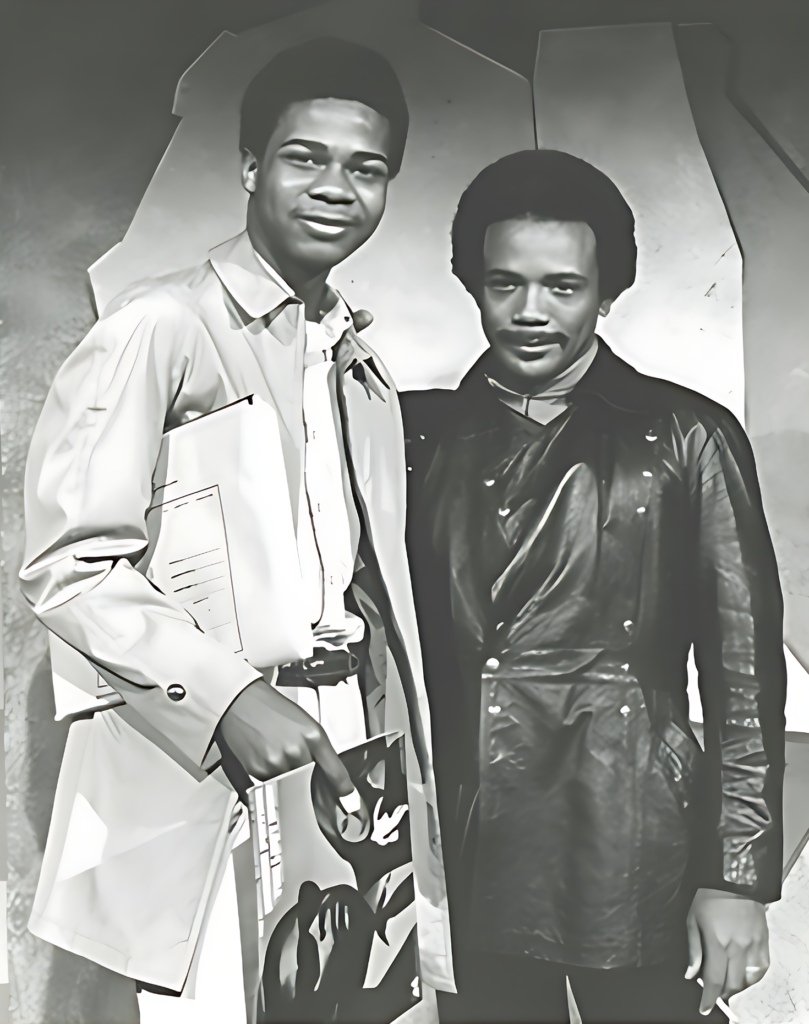
Quincy Jones and Primous Fountain — first meeting
Primous Fountain is an American symphonic composer whose work has developed independently into a body of large-scale orchestral compositions marked by architectural breadth and sustained expressive power.
Raised in Chicago’s Ida B. Wells community, Fountain’s early life cultivated an inward discipline and self-reliance that would later shape his artistic path. Entirely self-taught, he began composing instinctively, completing early works with fluency and speed.
A decisive turning point came with Symphony No. 2. For the first time, a work resisted immediate realization. What began as creative impasse became structural expansion. From that point forward, Fountain’s music entered a new phase — broader in scope, deeper in thematic development, and increasingly monumental in proportion.
The symphonies that followed grew dramatically in scale. Symphony No. 8 exceeds 400 pages in full score. The recently completed Symphony No. 9, composed over approximately two years and refined through rigorous reconsideration, extends to approximately 463 pages.
With the completion of the Ninth Symphony, Fountain’s decades-long artistic evolution stands at a new public threshold — the emergence of an independent American symphonic voice devoted to long-form orchestral architecture.
At the tender age of 25, Fountain achieved the remarkable distinction of becoming the youngest ever recipient of the prestigious Guggenheim Award, an accolade he was honored with not just once, but twice. His illustrious career has indeed lived up to the lofty expectations set by his early patrons. Renowned orchestras such as the San Francisco, Chicago, Milwaukee, Buffalo, Minnesota, and Detroit Symphonies have performed his compositions, with his music resonating in the hallowed halls of Carnegie Hall and Lincoln Center in New York City.
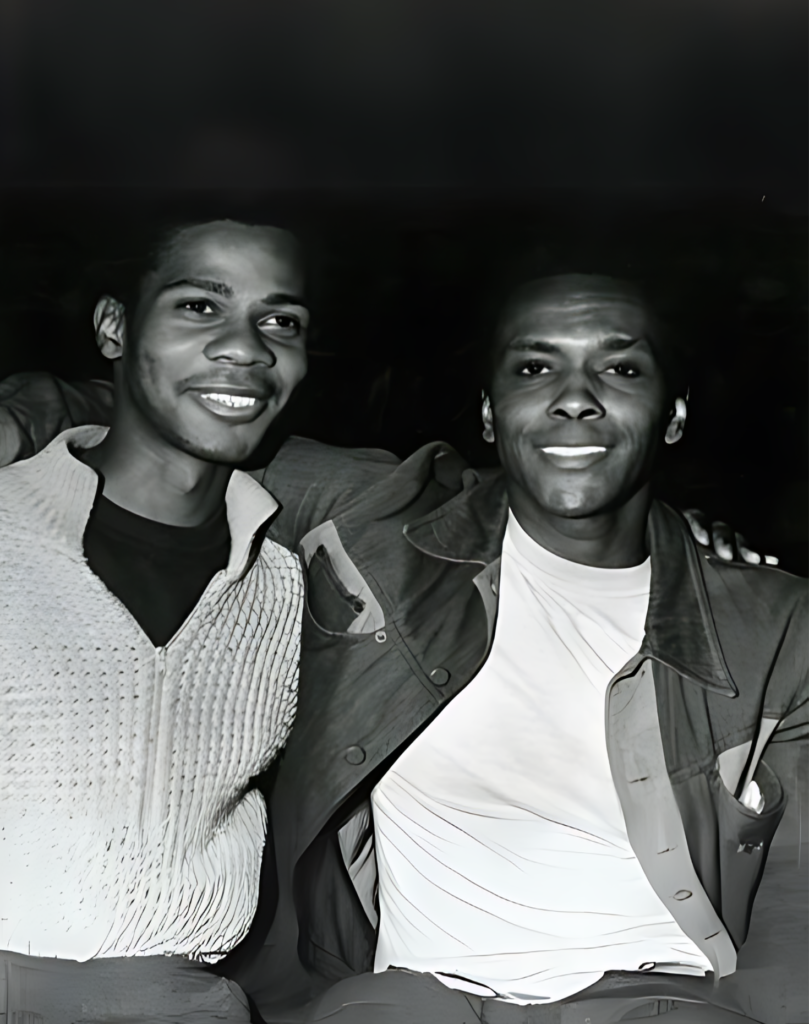
With Arthur Mitchell, founder of Dance Theatre of Harlem, who choreographed Manifestations to Fountain’s work
A pivotal figure in Fountain’s career was Gunther Schuller, an influential force in classical music during his time. Schuller, who directed Tanglewood, played an instrumental role in Fountain’s success. He orchestrated the commission for Fountain to compose ‘Ritual Dances’ and maneuvered a last-minute rehearsal, known as a reading, of one of Fountain’s orchestral pieces to secure a crucial recording. This very recording was later played by pianist Herbie Hancock for the legendary Miles Davis, who, deeply moved, lauded Fountain’s brilliance and expressed a fervent desire to feature his work under the prestigious banner of Columbia Records. „I had a profound admiration for Miles Davis and was deeply honored by his recognition.“ Fountain remarked, adding a personal touch to this extraordinary anecdote.
Schuller’s support didn’t end there. He was instrumental in encouraging Fountain to apply for a Guggenheim Award, a concept entirely foreign to Fountain at the time. Reflecting on Schuller’s influence, Fountain recalls: “I want that at some time in history, Black people will have someone to look up to like you, to be proud of and remember in classical music.”
Fountain’s gratitude towards Schuller is profound, acknowledging him a pivotal mentor whose impact on his career and life is immeasurable.
Despite the challenges, Fountain remains steadfast in his artistic vision, continuously influencing and redefining the landscape of classical music. His unwavering dedication and innovative spirit ensure that his music will continue to resonate and inspire for generations to come.
Still full of dreams…
The ambitions of this giant are inexhaustible. It can be expected that in his ninth Symphony, he will once again remind us why he is considered an exceptional composer. He would also like to include works of a different nature than orchestral in his repertoire. This is exactly what he plans to demonstrate at his upcoming performances in Europe, which he is very much looking forward to.
In pursuing his independent direction, we can expect an unconverional combination of world-class artists and classical music. However, the composer’s heart still remains loyal to America, where he feels at home and open to further cooperation with famous conductors and large orchestras.
